
The Starting Point
When we launched Watashi Colorizer in late 2025, we had exactly zero marketing budget. No VC funding, no ad spend allocation, no agency retainer. We were a small indie studio with a product we believed in and a conviction that if the right people could find it, they’d use it. The question was how to get found.
Our starting position was brutal. Zero domain authority, zero backlinks, zero organic traffic. The product was live but invisible. We were competing against established tools with years of SEO equity, paid ad campaigns, and large followings. A direct advertising battle was out of the question — we simply couldn’t afford it.
So we made a deliberate decision: invest everything in organic search. Not as a supplement to paid acquisition, but as the entire strategy. Every hour we would have spent managing ad campaigns went into content creation, technical optimization, and building topical authority instead.

Our SEO Strategy
Our strategy had three pillars: technical excellence, content depth, and topical authority. Technical excellence meant a perfect Lighthouse score — not 85 or 90, but 98+. We obsessed over Core Web Vitals, semantic HTML, structured data, and page speed. Every page loads in under 1.5 seconds. Every image is optimized. Every schema markup is validated.
Content depth meant writing articles that were genuinely more useful than anything else ranking for our target keywords. Not 500-word keyword-stuffed blog posts, but 1,500-2,500 word articles written from a publisher’s perspective with real production experience. Articles like our guide to colorizing webtoon chapters and manga colorization tools comparison rank because they contain information you can’t find anywhere else.
Topical authority meant covering the entire subject of manga and webtoon colorization comprehensively. Not just one article, but six interlinked articles covering different angles: how-to guides, tool comparisons, technical deep-dives, format-specific content, and workflow design. Search engines reward sites that demonstrate expertise across a topic cluster, not just on a single page.
We also invested heavily in internationalization. Our site supports 13 languages with proper hreflang tags, localized content, and language-specific URLs. This opened up organic traffic from markets that English-only competitors completely ignore — Japanese, Korean, Chinese, Spanish, Portuguese, and more.

The Tools We Used
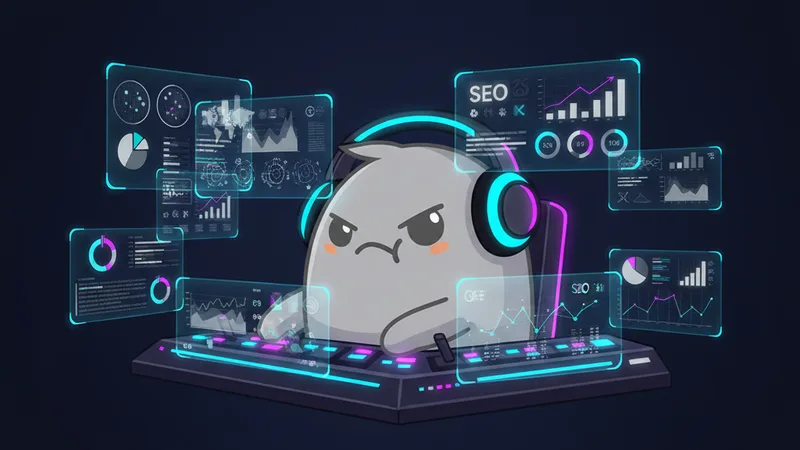
We built Watashi Marketing partly because we needed these exact tools ourselves. The Lighthouse audit module runs automated PageSpeed Insights checks on every page, tracking our scores over time and alerting us to any regressions. When we deploy a change that drops our performance score from 98 to 94, we know within 15 minutes.
The schema scanner validates our structured data automatically. Every article page has Article schema, BreadcrumbList schema, and Organization schema. The scanner verifies all of it and flags missing or malformed markup. This matters because rich snippets in search results dramatically improve click-through rates — and you can’t get rich snippets without valid schema.
For keyword tracking, we monitor our positions for about 40 target keywords across Google. We track rankings weekly and can see exactly which content changes moved which keywords. This data-driven approach replaced the guesswork that most indie developers rely on when doing SEO.
AI visibility monitoring was the newest addition. As AI-powered search features (Google AI Overviews, Bing Copilot, ChatGPT search) became more prevalent, we started tracking whether our content appears in AI-generated answers. This is the next frontier of organic visibility, and we’re measuring it from day one.
Results After 6 Months
Six months after launch, here’s where we stand. 15,000 monthly organic visits to watashicolorizer.com and watashigames.com combined. $200/week in revenue from Watashi Colorizer subscriptions and pay-per-use credits. $0 total ad spend since launch. Every single user found us through organic search, direct referrals, or content links.
Our keyword rankings tell the story. We’re #1 for “watashi colorizer” (branded, but important for navigational intent). We’re on page 1 for “manga colorizer”, “colorize manga online”, “webtoon colorization tool”, and “bulk manga colorization”. These are the exact keywords our target users search for.
Our Lighthouse scores are consistently 98+ for Performance, 100 for Accessibility, 100 for Best Practices, and 100 for SEO across all pages. These aren’t vanity metrics — they directly correlate with our search rankings. Google’s page experience signals are a confirmed ranking factor, and we treat them as non-negotiable.
The ROI calculation is straightforward. We spend approximately 10 hours per month on content creation and SEO maintenance. At a conservative $50/hour opportunity cost, that’s $500/month invested. We earn roughly $800/month in revenue. That’s a 60% return on time invested, and the returns compound as our domain authority grows and old content continues to rank.
Key Takeaways
Technical SEO is table stakes, not a differentiator. You need perfect Lighthouse scores, valid schema, fast load times, and mobile-first design just to compete. These won’t give you an advantage — but lacking them will guarantee you lose. Use tools like Watashi Marketing to automate the monitoring so you catch regressions immediately.
Content depth beats content volume. We published six articles in six months, not sixty. Each one is comprehensive, experience-backed, and genuinely useful. One 2,000-word article that ranks on page 1 is worth more than fifty 500-word posts that rank nowhere. Write fewer pieces, but make each one the best resource available for its target keyword.
Internationalization is an unfair advantage. Most indie developers only create English content. By supporting 13 languages with proper i18n implementation, we capture organic traffic from markets with zero competition. A Japanese user searching for manga colorization tools in Japanese finds our site because we’re one of the few results with properly localized content.
Patience is the hardest part. SEO results take 3-6 months to materialize. During months 1 and 2, we had almost zero organic traffic. It was tempting to abandon the strategy and throw money at Google Ads. We didn’t, and by month 4, the compound growth kicked in. If you’re an indie developer considering SEO, commit to at least 6 months before evaluating results.
For a step-by-step guide to marketing AI tools specifically, see our complete guide to marketing AI tools on Watashi Marketing.